


Innovating with nature: Stronger Shores approach to coastal resilience

Emily Ross, Project Delivery Officer at South Tyneside Council, details their marine restoration project, including engaging with the community and supporting academic research.
Earlier this year, I had the pleasure of presenting at APSE’s Really Rewilding seminar - a fantastic event bringing together practitioners, policymakers, and researchers to explore rewilding across landscapes. The seminar offered a valuable opportunity to show how marine restoration can lay the groundwork for future rewilding by rebuilding habitats, restoring ecological function, and creating conditions for nature to thrive.
Stronger Shores is one of 25 projects funded through Defra’s £200 million Flood and Coastal Innovation Programme, managed by the Environment Agency. This innovation funding allows us to trial new techniques, and we are investigating how kelp forests, seagrass meadows, and native oyster reefs, can provide nature -based solutions that reduce coastal erosion and provide wider benefits to coastal communities and beyond.
Risk Management Authorities (RMAs), including councils, are under growing pressure to rethink traditional coastal defence strategies. Hard engineering, such as sea walls, groynes, revetments, have long been the default, but these solutions are often carbon-intensive, costly, and ecologically disruptive. Policy is now shifting toward more sustainable, integrated approaches, with nature-based solutions playing a central role in achieving climate resilience, net zero, and environmental net gain.
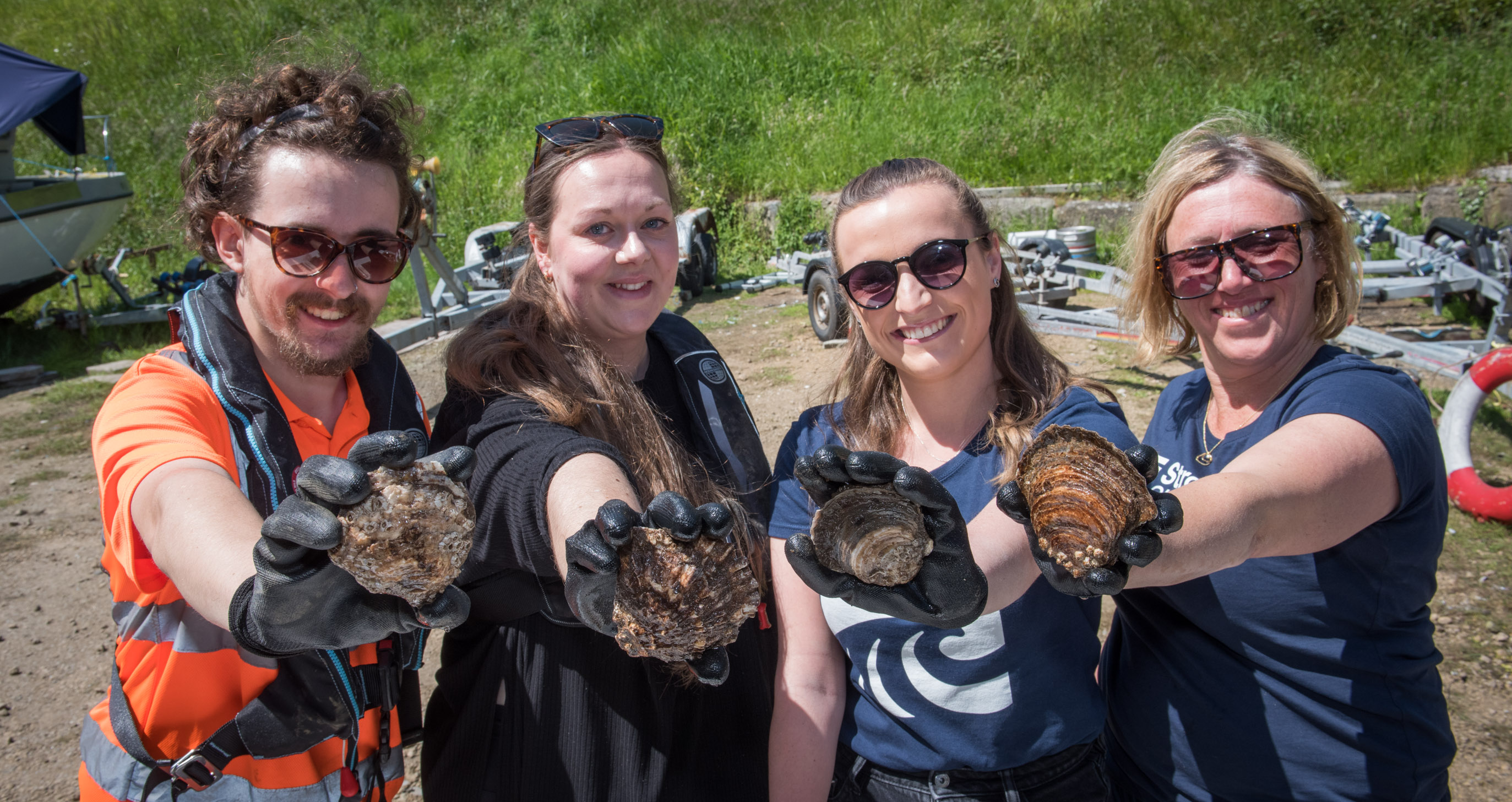
Stronger Shores is testing these solutions in real-world conditions along the North East coast, from Lindisfarne in Northumberland to Skinningrove in Redcar and Cleveland. Hosted by South Tyneside Council, the project is driven by a strong delivery partnership including Newcastle University, University of Plymouth, Tees Rivers Trust, North Sea Wildlife Trusts, the Zoological Society of London, and Groundwork North East and Cumbria (Wild Oysters Project). Together, we bring expertise in marine ecology, academic research, community engagement, and environmental monitoring to build a more holistic and adaptive model for coastal risk management.
Our restoration work is hands-on and evidence-driven. For example, the Wild Oysters Project is trialling two oyster reef deployment methods - scattering cultch (a mix of shell and stone) along with oysters over an extensive area of seabed, and the placement of artificial reef structures with oysters attached to assess which best supports long-term native oyster reef recovery. Our seagrass restoration, led by Tees Rivers Trust and North Sea Wildlife Trusts, involves seed processing and nursery development to address limited seagrass seed availability in the region, and the planting of seagrass at different sites in the study area.
Our kelp work, in partnership with North Sea Wildlife Trusts and SeaGrown, uses floating units seeded with local kelp and fitted with sensors to monitor biodiversity, water quality, and wave attenuation. We’re also supporting PhD students at Newcastle University, whose research is helping us better understand wave attenuation, remote sensing, and in-situ monitoring. In addition, the University of Plymouth is leading a PhD on natural capital accounting, helping us quantify the broader environmental and economic value of restored marine habitats. These academic partnerships strengthen the project’s scientific foundation. They also help build the next generation of coastal resilience experts.
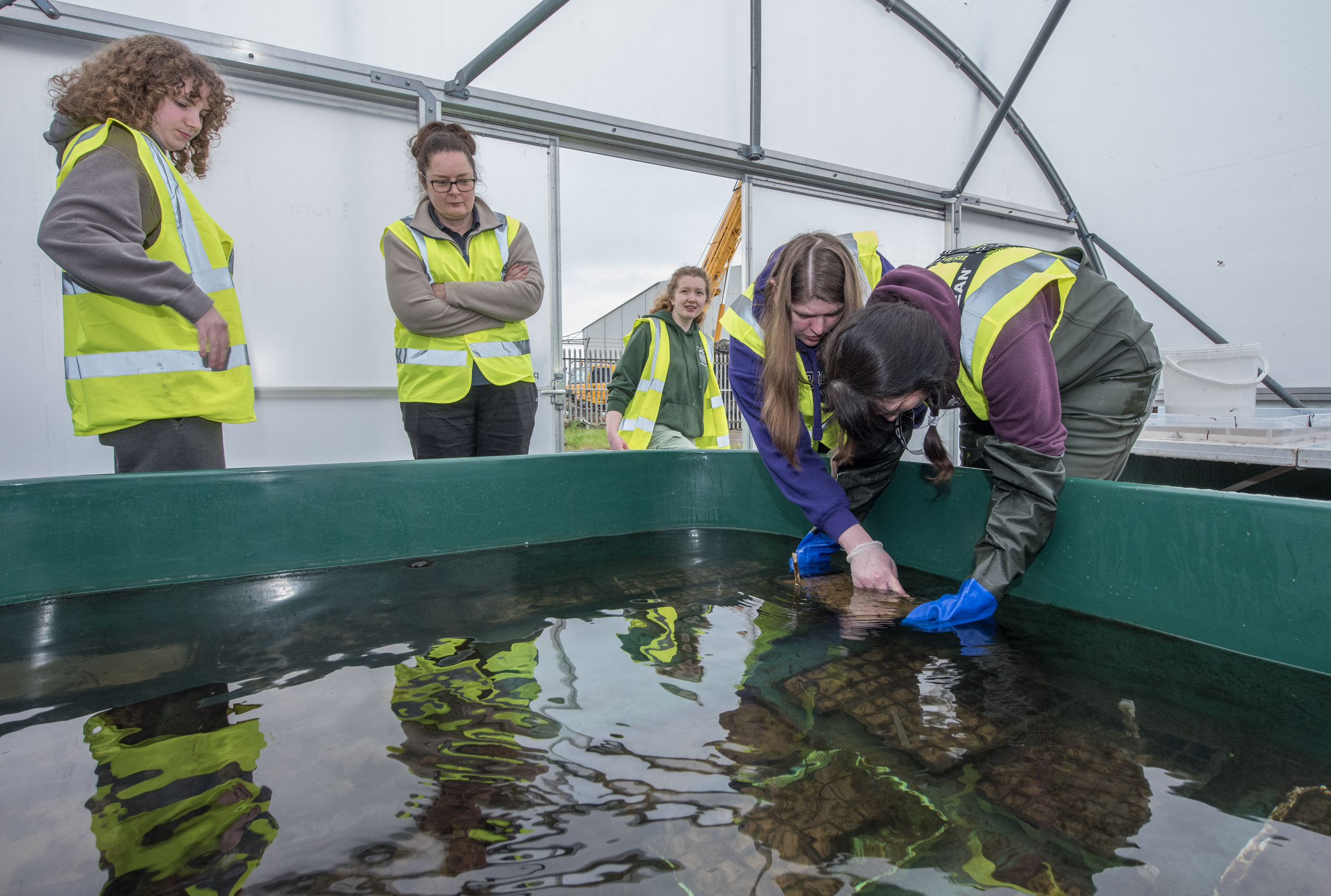
A key theme at the Really Rewilding seminar was the importance of community. Stronger Shores isn’t just about science - it’s about people. Marine habitats are often out of sight and mind, making it harder for people to connect with their value. We’re using creative methods to help communities engage with life below the waves and understand the role marine habitats can play in coastal resilience. As part of our project outputs, we’ll share case studies that highlight the importance of involving communities in flood and coastal erosion risk management. We aim to make a strong case for future funding to include community engagement as a core component of effective, inclusive, and lasting resilience strategies.
As we enter the final phase of the project, our focus is on legacy. We’re developing the Stronger Shores Toolkit - a comprehensive resource that will consolidate our data, learning, and case studies to support other RMAs and policy makers in adopting nature-based solutions. We want to ensure the learning from Stronger Shores is impactful turning innovation into practical tools that will ensure our insights continue to shape coastal resilience strategies across the UK.
Collaborating with APSE and participating in events like Really Rewilding is a vital part of our journey. These platforms allow us to learn from others working to protect and enhance our environment. They also help us share our own lessons, raise awareness of Stronger Shores, and ensure our research reaches the right audiences. By connecting with like-minded professionals, we can accelerate progress, avoid duplication, and build a stronger, more informed community of practice around nature-based solutions. These approaches offer a cost-effective, sustainable, and community-friendly way to manage and communicate coastal risk. They align with national policy priorities and provide opportunities for local leadership in climate adaptation.
Promoting excellence in public services
APSE (Association for Public Service Excellence) is a not for profit unincorporated association working with over 300 councils throughout the UK. Promoting excellence in public services, APSE is the foremost specialist in local authority frontline services, hosting a network for frontline service providers in areas such as waste and refuse collection, parks and environmental services, cemeteries and crematorium, environmental health, leisure, school meals, cleaning, housing and building maintenance.
.png)

.png)


