


Conversion of vacant student accommodation to provide temporary accommodation for families
Fresh from winning the APSE Service Award for Best Building and Housing inititiave, find out how Derby are using empty student housing to support families in their time of need.
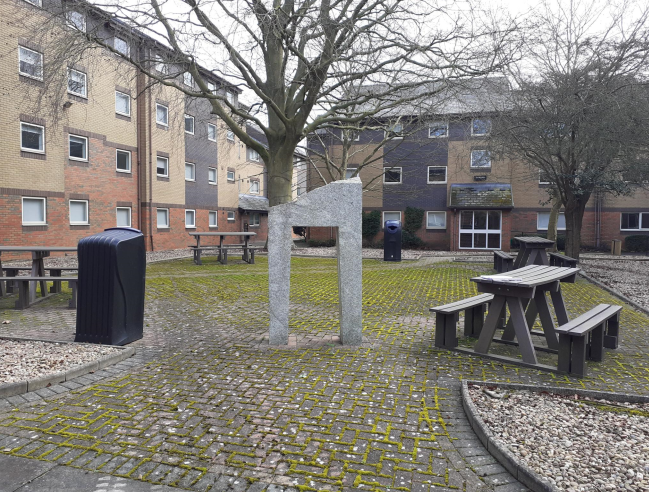
Derby City Council has undertaken a significant initiative to purchase and remodel long term vacant student flats to use as an alternative to overnight accommodation. The site consisted of 49 seven bedroomed flats over 16 blocks.
The project is split into two phases. The first was the site purchase and recommissioning of 46 flats to provide self-contained temporary family accommodation and the second phase is the conversion from 49 to 95 apartments.
The purchase completed in June 2024 with families moving in between September and November 2024. Once the families were living there the cost savings were evident within a short period of time. There was a reduction in the weekly amount the Council had to pay for each family in overnight accommodation and an improvement in the housing benefit subsidy loss, even allowing for the Council meeting any additional cost to those families subject to an Under Occupancy Charge (as their flat technically had 7 bedrooms).
Prior to purchase the decision was made for the property to be held in the General Fund (GF) rather than the Housing Revenue Account (HRA). The financial model included Un-ringfenced Right To Buy receipts as well as external grant funding via MHCLG, unallocated Section 106 receipts for affordable housing and corporate borrowing. Although the GF is subject to a higher borrowing rate than the HRA, plus the need to set aside a Minimum Revenue Position (MRP), the significant saving achieved within the subsidy system was factored in so the project achieves an early operational surplus and will have generated a surplus greater than the outstanding debt by year 19.
If the property were to be held within the HRA, any saving achieved within the subsidy system cannot be used towards an operational loss within the HRA, so although the HRA can borrow at a more competitive rate than the GF the project would not break even or produce an operational surplus.
The financial model incorporates an inflation factor as the project is delivered over 3 financial years as well as property management and maintenance and borrowing costs. The rental income also increases as additional apartments are brought into use.
Site work re-commenced in April 2025, after detailed design was complete, remodelling the 3 vacant flats into 3 two-bedroom and 3 three-bedroom apartments. These will be used to vacate other blocks to allow a rolling programme of refurbishment and conversion of the remaining flats over a 2 year programme.
To date the refurbishment work has been more complex than originally anticipated in relation to technical matters rather than the layout design. As the work is considered a substantial change the Building Regulations are applicable so some additional work has been included, such as replacement of all unvented windows, to meet ventilation requirements and as part of a longer term maintenance strategy. There has also been a change from a full evacuation to a stay put fire strategy so an upgraded fire system, different fire doors and additional fire compartmentalisation have also been included in the scope of works. It has also become evident that additional external works are needed to make the area more family friendly so gravel areas are being removed and replaced with soft landscaping.
Extensive work has also been required to convert from communal boilers to individual heating systems, with separate service metering, requiring extensive additional service runs – challenging when the site has a blanket Tree Protection Order and there are trees all around the perimeter where the service runs where needed. The impact of additional loading on the service infrastructure has necessitated different solutions in different apartments to prevent the need for an increased service capacity or new sub station which would have incurred significant cost.
The project remains on budget despite the extra work being included due to the inclusion of a contingency and robust budget monitoring by a single dedicated Project Manager for both phases of the work. In addition a Delivery Team, consisting of representatives from all disciplines involved with undertaking the works, managing the property and providing support has also been created. A governance structure is also in place for reporting, monitoring and any potential escalation required.
The impact of this initiative extends beyond simply providing housing. By offering stable, high-quality homes, the project contributes to improved health and educational outcomes for families, particularly children, who previously lived in unsuitable overnight accommodation.
The success of this initiative has highlighted the potential for similar large-scale acquisitions, which could provide a more cost and service efficient alternative to purchasing or building individual properties. Delivery can be fast paced resulting in the benefits being evident quicker.

Promoting excellence in public services
APSE (Association for Public Service Excellence) is a not for profit unincorporated association working with over 300 councils throughout the UK. Promoting excellence in public services, APSE is the foremost specialist in local authority frontline services, hosting a network for frontline service providers in areas such as waste and refuse collection, parks and environmental services, cemeteries and crematorium, environmental health, leisure, school meals, cleaning, housing and building maintenance.
.png)


.png)


