


The UK's most advanced MRF – a council collaboration
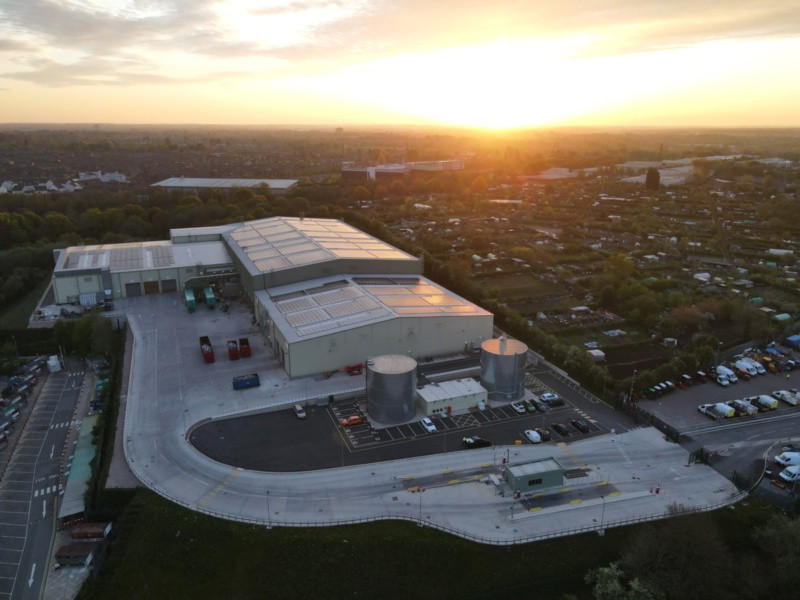
Richard Dobbs, managing director of Sherbourne Recycling, explains the facility’s journey from inception to operation, touching on the challenges faced, the barriers overcome and Sherbourne’s vison for the future.
With targets tightening, the environmental landscape changing and a raft of new policies now committed to law, the waste sector is developing at an astonishing pace. While this momentum will play an important role in accelerating national recycling rates, it’s safe to say that progress isn’t without its complications.
Indeed, the burden of change – whether legislative, market volatility or changing consumer habits – often falls to collection authorities, who are ultimately responsible for delivering upon legislative requirements. However, the scarcity of long-term collection contracts, the restructuring of public services and escalating prices often leaves councils in a precarious position, not always having the control, capacity or agility to flex to meet changing needs – and all at a time where budgets are stretched.
This, alongside geo-political pressures, circular economy ambitions and increasing stakeholder demand for new, sustainable and technologically-advanced solutions for recycling and recovery, is turning up the pressure on council waste management, finance, legal, and procurement teams.
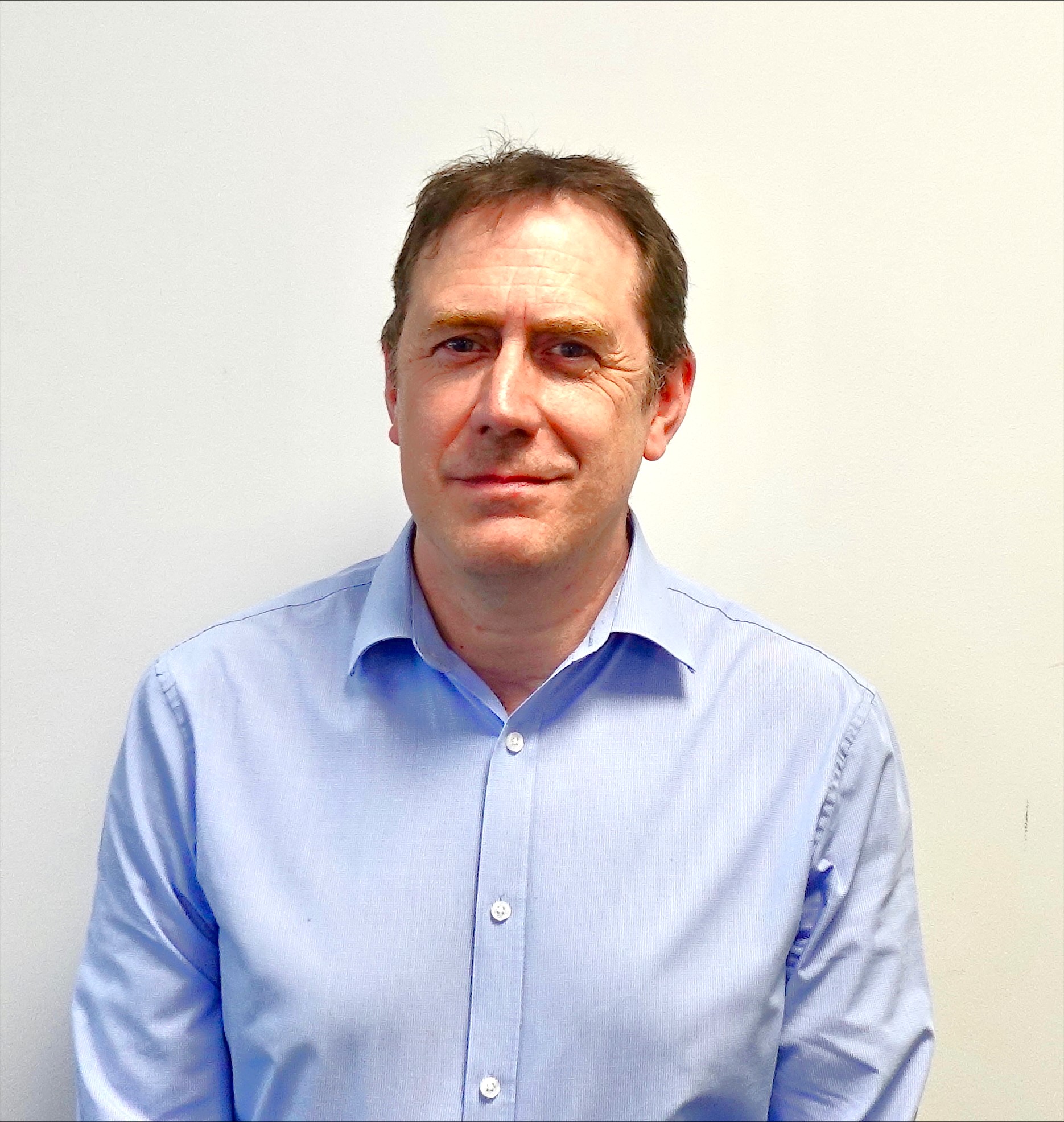
Richard Dobbs, managing director of Sherbourne Recycling
The idea behind Sherbourne Recycling was born from this frustration, with eight forward-thinking local authorities of different sizes, communities, and representing a broad political spectrum choosing to take back control of their waste processing. The vision was to create a world-leading material recovery facility (MRF) that could not only provide a robust, reliable, long-term solution to effectively process recycling, but also offer the flexibility to adapt to changes in the regulatory landscape, consumer habits, and material composition. As the first project of its kind in the UK, it was a case of building entirely from the ground up.
The project started in 2016, with a feasibility study to review opportunities, challenges, and barriers. Soon after, a full project team was formed, who collectively led the necessary modelling work to build a comprehensive business case. This was quickly supplemented by financial modelling, a robust procurement strategy and bespoke governance structures – a critical part of ensuring long-term model sustainability, value for money and return on investment potential ensuring it matched the growth and appetite of the partner councils.
With the aim of delivering maximum value, a contractual mechanism was developed between the partner councils, which included a 25-year waste supply agreement, shareholding arrangements and loan terms to fund the project. Throughout the process, providing absolute assurance on legislative resilience and financial pressures was essential. This was no simple process, with the complexity of the procurement exercise taking 18 months alone.
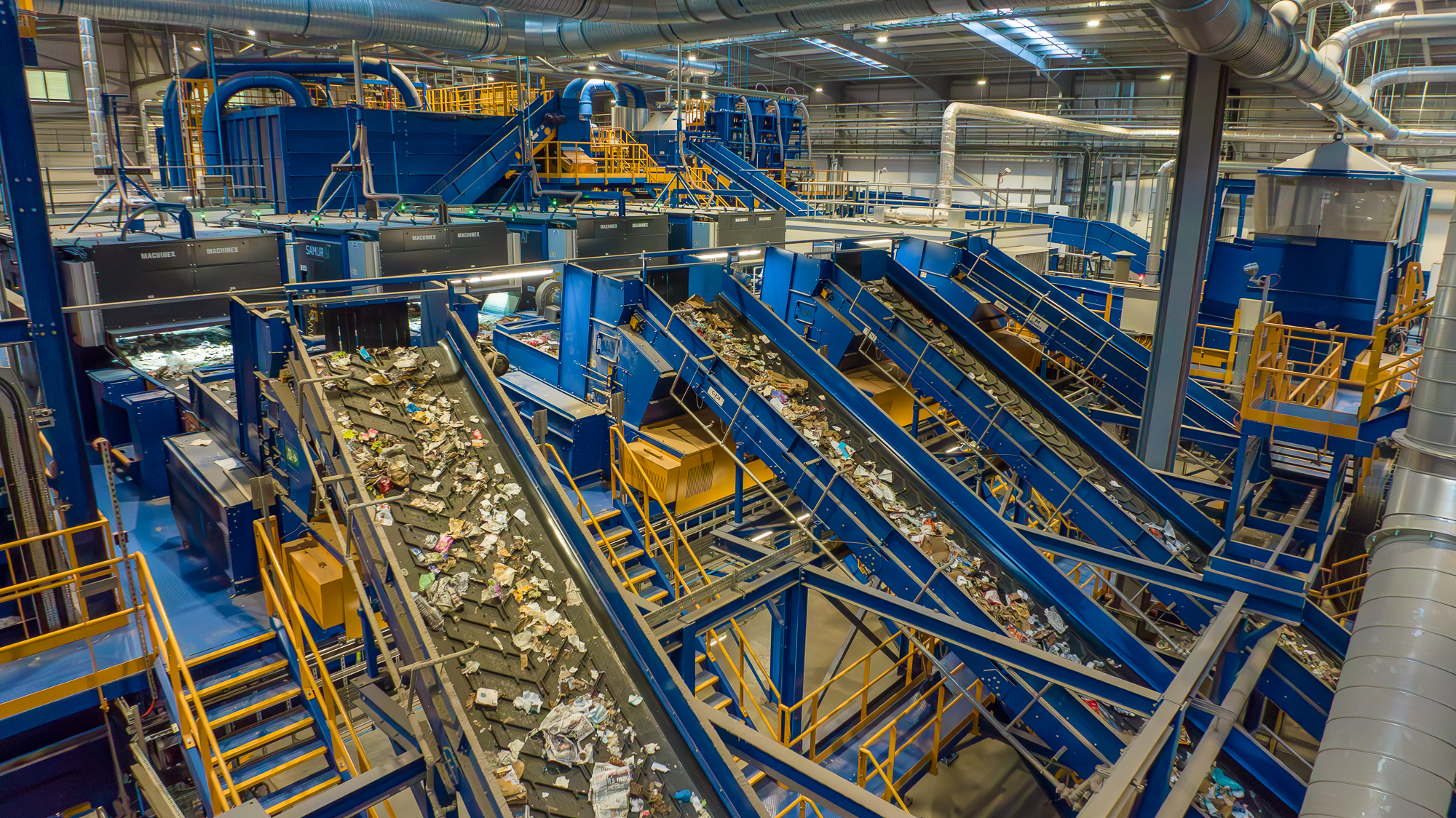
Inside the Sherbourne Recycling Plant
Construction of the facility began in May 2021, with the main body of civils work completed within 12 months to coincide with the delivery of processing equipment from specialist MRF contractor Machinex. With the plant designed to set new standards in efficiency and accuracy, it was critical that this technology performed better than any other site of its type in the world.
This posed its own challenges – creating a new model from scratch, finding the staff to operate a first-to-market site, aligning with expectations from eight very different local authorities. Pioneering thinking was key.
Thanks to a pioneering combination of AI and robotics, the facility processes waste in the most sustainable way possible. Capable of handling 250,000 tonnes per annum, the purpose-built plant combines 18 sorting robots and 14 optical sorters to separate dry mixed recycling (DMR) and produce high quality recyclate. Unique to Sherbourne Recycling is that 100% of the output can be supplied exclusively to UK reprocessors, thanks to the outstanding quality of materials it achieves.
Following a comprehensive commissioning and testing phase, the site became fully operational in Q2 2024 and the results since have been clear to see. Indeed, not only has the programme changed the local authority perception of risk placement, but the site has also broken boundaries with end markets – developing materials that are up to 99% in purity.
Across the partner councils and other contracted local authorities, the facility is not just providing a sector-leading service, but helping to drive a significant uplift in recycling rates. DEFRA’s latest annual report on local authority collected waste management results, for example, saw Stratford-on-Avon become the 3rd best performing authority in the Country, achieving a 61% recycling rate. Elsewhere, six of the remaining seven partners all increased their recycling rates by moving to Sherbourne – four of these being named within the UK’s top 20 most improved local authorities for that year.
Importantly, the unique model of ownership and control has meant that incremental improvements can quickly be made to further improve returns and adjust to the needs of the market. This includes recalibrating equipment to eject nappies from the stream (lowering contamination rates to less than 0.3%), as well as removing PET trays from the PET bottle line (increasing resale values.)
The plant has even been designed to process flexible plastics – two years ahead of legislative requirements. Best of all, investment in state-of-the-art technology means that this can be achieved via a fully comingled collection model – making recycling easier and more accessible for residents and more straightforward and cost-effective for waste collection authorities.
.jpg)
AI controlled robot arm
The partner councils are benefiting from the financial security achieved though their control over the Sherbourne facility, and the 25-year agreement in place to process their recycling. This security is boosted by the commercial growth of the company through securing further contracts and tonnage, alongside working with packaging manufacturers on product recyclability and testing viability through its innovative ‘Living Lab’ capability.
As a result, Sherbourne is already gaining sector and national recognition, having hosted the likes of DEFRA, The National Infrastructure Commission and LARAC to better understand how the facility is supporting its partner councils and what opportunities for other local authorities may exist. We were also recently presented with the Best Commercialisation and Entrepreneurship Initiative award at the Association for Public Service Excellence (APSE) Annual Service Awards, 2025.
Over the coming years, Sherbourne will continue to explore opportunities to expand the presence of the company in the waste landscape and generate further return to its shareholders. Its main objective will be to fill the site to its processing capacity. This goal is already in motion with Sherbourne having secured two further local authority DMR processing contracts, and further tonnage volume in 2024-25.
With a replicable model, experienced team and proven systems, the sky really is the limit!
For more information about Sherbourne Recycling, or the site’s unique approach to creating value through waste management excellence, visit www.sherbournerecycling.co.uk.
Promoting excellence in public services
APSE (Association for Public Service Excellence) is a not for profit unincorporated association working with over 300 councils throughout the UK. Promoting excellence in public services, APSE is the foremost specialist in local authority frontline services, hosting a network for frontline service providers in areas such as waste and refuse collection, parks and environmental services, cemeteries and crematorium, environmental health, leisure, school meals, cleaning, housing and building maintenance.
.png)

.png)


